Screen and Recoat
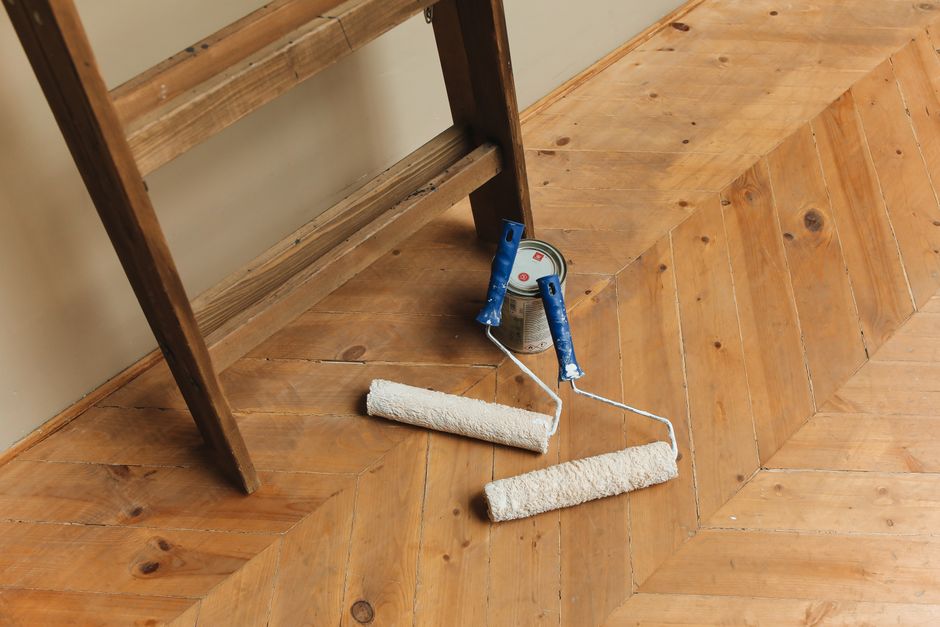
A screen and recoat is the lighter alternative to a full refinish. The name is trade shorthand. The sources read for this site describe the same kind of job under other names: the National Wood Flooring Association (NWFA) calls it a maintenance coat, and Bona, a floor-care manufacturer, calls it recoating. This page covers what the job involves, what has to be true of a floor for it to work, and where it stops. The screen and recoat vs full refinish article explains how to choose between the two.
What a recoat involves
NWFA describes a maintenance coat as cleaning the existing floor finish, lightly sanding it, and applying a fresh coat of finish (NWFA, Refinishing Your Floors, as of 2026). Bona describes three levels of work: polishing, which adds a new layer over the existing finish; recoating, in which a buffer lightly scuffs the finish before a new coat; and refinishing, which completely removes the existing finish. It calls recoating excellent preventative maintenance (Bona, Recoat Hardwood Floors Guide, as of 2026).
Bona's professional page for its recoat treatment lists the steps as cleaning the floor, abrading it with 240 grit, and applying the finish within 2 hours (Bona, Recoat Treatment, as of 2026). A separate Bona page lists timings for what it calls "revive," "recoat" and "refinish": revive ready in a few hours, recoat ready overnight, and refinish ready in 2-4 days (Bona, Revive, Recoat and Refinish my Floors, as of 2026). That page's "revive" and "recoat" do not map exactly onto the "polishing" and "recoating" terms above; Bona uses different labels on different pages for similar light-duty treatments. Those are Bona's claims for its own systems, not general figures.
When a recoat will do
NWFA says that when floors look dull, they can be renewed through recoating (NWFA, Maintenance, as of 2026). A 1980 wood-floor publication from Purdue and the U.S. Forest Service's Forest Products Laboratory says finishes are best renewed when they begin to show signs of wear in traffic channels, but before the bare wood is exposed (USDA Forest Products Laboratory, 1980). Bona's professional page says that every few years floors can be recoated. That schedule is Bona's framing. NWFA says individual maintenance schedules vary with use, wear and tear, and lifestyle, and it gives none (NWFA, Maintenance, as of 2026).
When a recoat will not do
NWFA recommends a complete sand and refinish when a floor has damage such as deep scratches and dents, and when the finish has worn away and bare wood shows. It adds that when a new coat does not meet the needs of the floor, a resand may be in order (NWFA, Refinishing Your Floors, as of 2026). Bona says bare wood is eventually exposed if a finish is not maintained, requiring a complete refinish, and that refinishing fixes major damage such as deep scratches and gouges, discoloration and fading (Bona, as of 2026). A recoat also leaves the color alone: NWFA ties a color change to sanding back to raw wood, which a recoat does not do. The sanding involved is covered on the floor sanding page, and the whole sequence on the hardwood floor refinishing page.
What has to be true for the new coat to bond
Bona's data sheet for Traffic HD says a floor being recoated must be free of wax, polish and oily residues, or adhesion failure can occur. The same sheet says abrading between coats is not needed unless more than 48 hours have passed, and then calls for 180-240 grit (Bona data sheet, 05/27/2026). The 1980 USDA publication says wax may interfere with the drying and adhesion of any new finish.
The Minwax data sheets add product conditions. For its oil-based floor finish, a previously finished floor should be in good condition, with no chipping, peeling, worn areas or residue, and is sanded lightly with 120 grit; if more than 10 hours pass before the next coat, the surface is sanded lightly with 220 grit (Minwax data sheet, Rev. 1, 1/30/2026). Minwax's water-based floor finish may be applied over existing polyurethane, takes two coats for a screen and recoat, and takes three on bare wood; between coats it calls for at least 2 hours but less than 8 hours, otherwise a light sanding with 220 grit (Minwax data sheet, undated, read in 2026).
Care after a recoat
The data sheets set rules for the first days after a new coat, and NWFA sets rules for routine care afterward. Both are collected in aftercare.
Questions worth asking about a recoat
- How will the existing finish be checked and prepared so that the new coat bonds?
- Has anything been used on the floor that leaves wax, polish or an oily residue?
- Which finish goes on, and does its data sheet allow a recoat over the existing finish?
- How many coats are proposed?
- Does the floor have deep scratches, dents or bare wood that a recoat will not address?