Hardwood Floor Species Guide
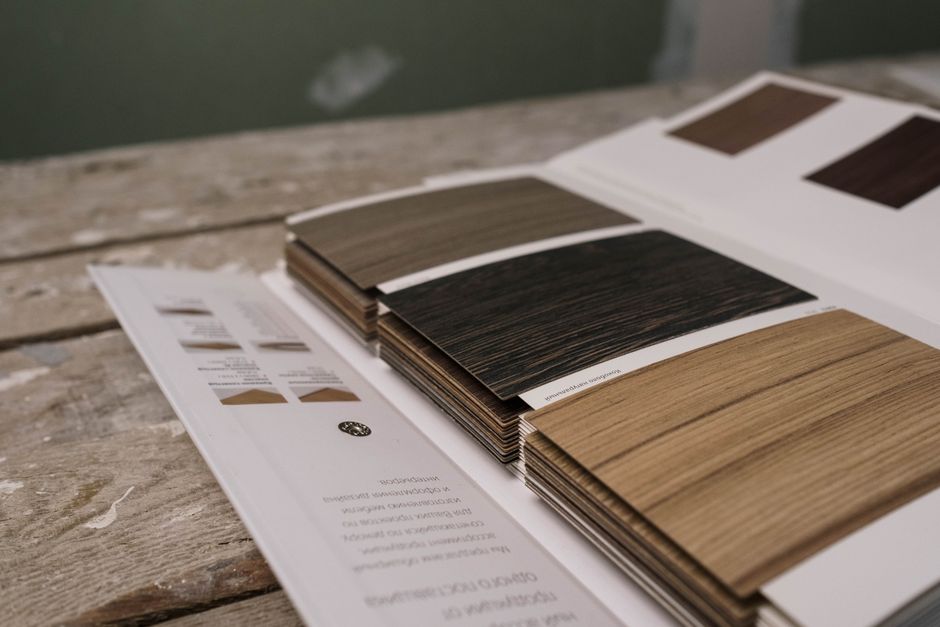
Species come up in almost every conversation about a hardwood floor, and the sources read for this site support two things about them: how hard each wood is, and a few principles about grain and stain. They do not support a ranking of species for refinishing, and this guide does not offer one. What follows is the hardness table, how to read it, and what the sources say about grain.
What hardness measures
The USDA Forest Products Laboratory's Wood Handbook (2021 edition) defines hardness as resistance to indentation using a modified Janka hardness test, measured by the load required to embed a 0.444-inch (11.28 mm) ball to one-half its diameter. It defines side hardness as hardness with the load applied perpendicular to the grain, and its table gives side hardness in pounds-force (lbf) at 12 percent moisture content (USDA Forest Products Laboratory, Wood Handbook, FPL-GTR-282, 2021, Table 5-3b). The National Wood Flooring Association (NWFA) describes the same Janka scale as the amount of pound-force required to push a 0.444-inch diameter steel ball halfway into the wood (NWFA, Durability, as of 2026).
Side hardness of common flooring woods
| Wood (Wood Handbook name) | Side hardness (lbf) |
|---|---|
| Oak, northern red | 1,290 |
| Oak, white | 1,360 |
| Maple, sugar (hard maple) | 1,450 |
| Maple, red (soft maple) | 950 |
| Ash, white | 1,320 |
| Hickory, shagbark | 1,880 |
| Pecan (hickory group) | 1,820 |
| Beech, American | 1,300 |
| Birch, yellow | 1,260 |
| Birch, sweet | 1,470 |
| Cherry, black | 950 |
| Walnut, black | 1,010 |
| Yellow-poplar | 540 |
| Douglas-fir (coast) | 710 |
| Pine, longleaf | 870 |
| Pine, loblolly | 690 |
| Pine, eastern white | 380 |
Source: USDA Forest Products Laboratory, Wood Handbook (FPL-GTR-282), 2021, Table 5-3b, inch-pound units (Wood Handbook, 2021).
Reading the table
"Red oak" is not one figure. The Wood Handbook lists several red oaks, and they differ: northern red at 1,290 lbf, and in the same table southern red at 1,060, black at 1,210, cherrybark at 1,480, pin at 1,510 and scarlet at 1,400 (Wood Handbook, 2021). A floor described only as red oak could sit anywhere in that spread, so the species should be named.
The figures are laboratory averages for clear wood of each species at 12 percent moisture content. They are not specific to any product or grade, and retailers' published Janka figures may differ from them. NWFA says walnut, cherry and birch are less hard than maple, hickory and oak, and that the cut of the wood and the finish also affect durability (NWFA, Durability, as of 2026). A higher number means more resistance to indentation. It is not a rating for how a floor looks after years of wear, and the finish matters too: water-based vs oil-based finish covers what the sources say about finishes.
Solid and engineered floors
NWFA says none of these Janka values apply to engineered wood flooring (NWFA, Durability, as of 2026). The table describes solid species. An engineered floor's top layer is a wear layer, and the refinishing criteria NWFA publishes for engineered floors are about that layer's thickness, not its species. Refinish or replace covers wear layers and what NWFA says about them.
Grain and stain
Two sources describe how grain affects stain. A 1980 wood-floor publication from Purdue and the U.S. Forest Service's Forest Products Laboratory says open-grained woods such as oak, ash, pecan and walnut take stain easily, while close-grained woods such as maple, and to a lesser extent birch and beech, take stain much more slowly. It says softwoods do not stain well (USDA Forest Products Laboratory, 1980). The 2021 Wood Handbook explains that stains accentuate the grain by absorbing differently into the earlywood, the latewood, knots and vessels, and that a penetrating sealer, sometimes called a wash coat, is sometimes applied before the stain to even out the color (Wood Handbook, 2021, chapter 16).
Those are principles, and neither source ranks species by how likely they are to blotch. Staining and color change sets the same principles beside what national cost guides add for staining.
What this guide does not say
- Which species refinish best. No source read for this site says.
- Which species are best for a particular room or household.
- How a species will look with a particular stain or finish.
For the whole process a floor goes through, the full refinishing process page has the sequence from sanding to the last coat.